


Investigating a suspected death cap mushroom poisoning
Poisoning is a significant public health issue worldwide. According to NICE, in the United Kingdom around 160,000 people are admitted to hospital each year with suspected poisoning, while many more cases are managed in the community through primary care and NHS advice services.¹ In the United States poisoning also presents a significant clinical risk and remains a cause of unintentional injury and death.²
Most deaths caused by unintentional poisoning in the US involve illegal drugs.² Though medicines, carbon monoxide, pesticides, household chemicals, and exposure to naturally occurring toxins, such as poisonous mushrooms, also pose risks and therefore continue to present challenges for clinicians and toxicologists.² ³ ⁴
One such challenge is that the onset of symptoms of mushroom poisoning can be delayed by many hours.⁵ To be clear, death cap mushroom poisoning is a serious medical emergency and requires immediate medical attention.
Please complete the form at the bottom of this article to request a complimentary trial of MedicinesComplete.
Worldwide cases of mushroom poisoning
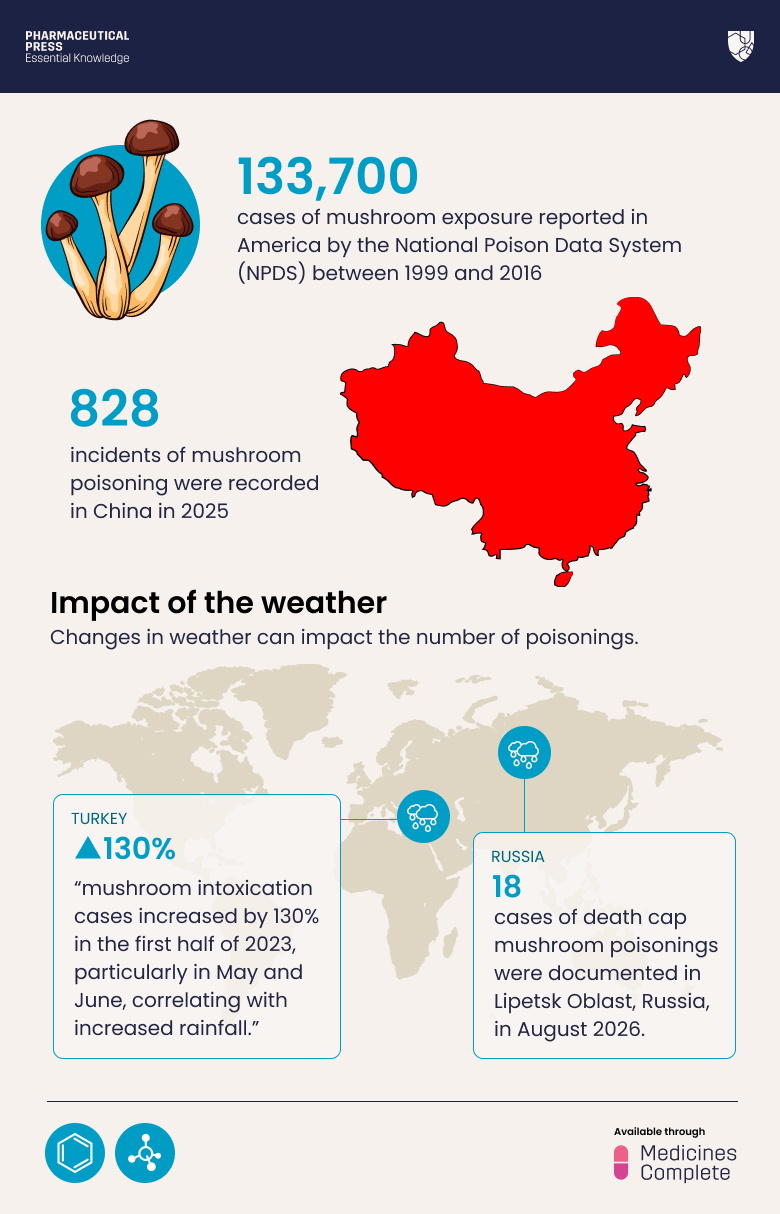
- Between 1999 and 2016 there were 133,700 cases of mushroom exposure reported in America by the National Poison Data System (NPDS).⁶
- In China 828 incidents of mushroom poisoning were recorded in 2025.⁷
- Changes in weather conditions can impact the incidence of poisonings. For example, in Turkey “mushroom intoxication cases increased by 130% in the first half of 2023, particularly in May and June, correlating with increased rainfall.”⁸
- In August 2026 18 cases of death cap mushroom poisoning were documented in Lipetsk Oblast, Russia, after weather conditions similar to a previous spate of poisonings in 1999.⁹
Evidence-based guidance on mushroom poisonings is relevant to toxicological investigations around the world. This article investigates a suspected death cap mushroom poisoning by providing an illustrative example. It then explores how Baselt’s Disposition of Toxic Drugs and Chemicals and Clarke’s Analysis of Drugs and Poisons may be used together to support toxicological investigation.
What is toxicology?
Toxicology is defined as “the study of the harmful effects of chemicals, substances, or environmental agents on living systems”.¹⁰ According to the British Toxicology Society, “the fundamental purpose of toxicology is to help avoid chemical injury, or manage the accidental exposure of humans and the environment”.¹¹ It is also important in post-mortem analysis, as the illustrative example below demonstrates.
Contact with harmful substances can arise from a range of sources, for example: medicines, household chemicals, environmental agents, and naturally occurring toxins, including those found in poisonous mushrooms.
In many cases, the effect and severity of harm caused is dependent upon the dose, route, and circumstances of exposure.
Effects can range from a mild illness to, in extreme cases, death.
Poisonous mushrooms require specialist toxicological insight as different species may contain toxins with markedly different effects.
A growing interest in foraged mushrooms
In recent years public interest in both cultivated and wild varieties of mushrooms has increased.
Guided “mushroom hunting” tours have become popular in Germany, while in the UK social media videos depicting influencers foraging for wild mushrooms in Epping Forest have led to concerns over how to protect rare species from excessive picking.¹² ¹³
In California in 2025 there was an “unprecedented outbreak” of illness and death associated with foraged wild mushrooms, a reminder that circumspection is important when dealing with potentially hazardous fungi.¹⁴
Amanita phalloides
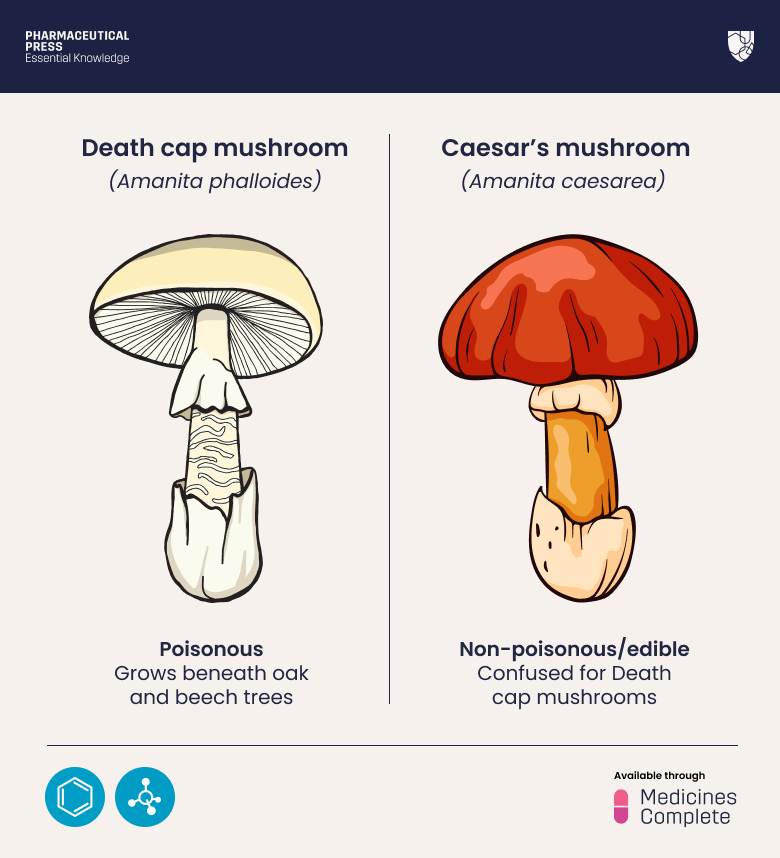
Perhaps the most infamous of fungi is Amanita phalloides, more commonly known as the death cap mushroom. It is typically found in mixed deciduous woodland particularly beneath oak and beech trees.⁴ Originating in Europe it has since spread worldwide.¹⁵
Capable of growing up to 15 cm tall and 15 cm in diameter the death cap is one of the most poisonous mushrooms.⁴
It resembles other edible mushrooms such as Caesar’s mushroom Amanita caesarea, particularly in early stages of growth.¹⁶
As interest in foraging has grown, awareness of the risks associated with consuming wild mushrooms has also increased.
Mushroom poisoning remains an important topic for toxicological investigation especially when the species consumed is unknown or symptoms are delayed.
Example scenario: toxicological investigation of suspected death cap mushroom poisoning
This illustrative example scenario has been adapted from published literature and is intended to show how specialist toxicology references may support investigations of suspected poisoning cases.¹⁷
Forensic toxicologists provide specialist expertise in post-mortem investigations by analysing and interpreting toxicological findings to help determine whether a substance may have contributed to a death.
In this example, a forensic toxicologist is instructed to review the death of an individual following the suspected ingestion of death cap mushrooms.
The death cap is one of the world’s deadliest mushrooms and is associated with roughly 90% of reported human deaths caused by mushroom poisoning.¹⁸ The fungus contains three main toxin groups:
- amatoxins
- phallotoxins
- virotoxins.¹⁷
Amatoxins, particularly α-amanitin, account for most of the harmful effects in humans.¹⁷
Prior to death, the individual was admitted to hospital following the onset of the following symptoms:
- vomiting
- diarrhoea
- severe abdominal pain.
The individual subsequently developed jaundice, with liver function tests demonstrating marked elevations in hepatic enzymes and evidence of worsening hepatic function consistent with acute liver failure. Their condition later progressed to seizures, coma, and ultimately their death.¹⁷
The toxicologist is asked to interpret the available laboratory findings and assess whether amatoxin poisoning may have contributed to the death.
The toxicologist uses MedicinesComplete
Using the search function within Clarke’s Analysis of Drugs and Poisons, the toxicologist locates information on amatoxins, including validated analytical methods for the detection and quantification of α-amanitin, as well as supporting case literature relevant to the interpretation of analytical results.¹⁹
The toxicologist then consults Baselt’s Disposition of Toxic Drugs and Chemicals to review the toxicity, metabolism, and disposition of amanitins. The resource provides important context for interpreting laboratory findings by describing the clearance of amatoxins from blood and their concentration in the liver and kidneys.⁵
Outcome
- Laboratory results are assessed alongside published toxicological evidence to support the investigation of suspected amatoxin poisoning
- Together, Clarke’s Analysis of Drugs and Poisons and Baselt’s Disposition of Toxic Drugs and Chemicals support the identification of the toxin and provide context for interpreting the significance of the findings
- In fatal or suspected deliberate poisoning cases, analytical findings may contribute to coroner investigations, Prevent Future Deaths (PFD) reports, and legal proceedings.²⁰
Conclusion
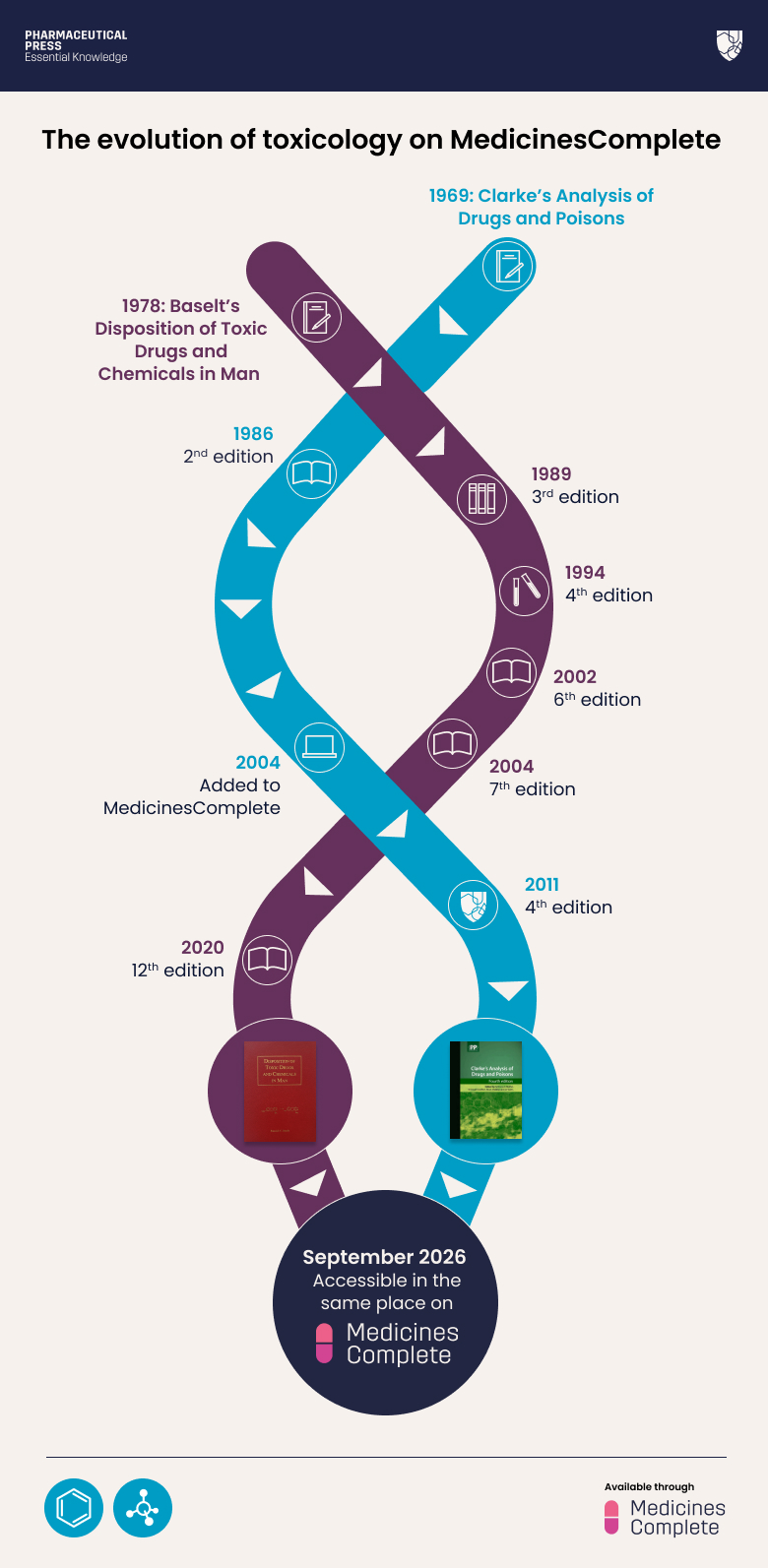
Clarke’s Analysis of Drugs and Poisons and Baselt’s Disposition of Toxic Drugs and Chemicals are complementary resources for toxicologists, analytical scientists, and health professionals engaged in toxicological investigations.²¹
When used alongside one another, these resources help health professionals move from the identification and detection of a substance to a deeper understanding of its clinical and toxicological relevance.
By bringing both resources together within MedicinesComplete, users can navigate seamlessly between analytical and interpretative information using a single platform and easy-to-use search tools.
This can help streamline the investigation process and reduce the need to consult multiple sources when evaluating toxicological findings.
Further reading
Readers interested in learning more about mushroom poisoning and toxicological analysis may wish to explore the following resources:
- Amatoxins (Clarke’s Analysis of Drugs and Poisons)
- Amanitin (Baselt’s Disposition of Toxic Drugs and Chemicals).
Trial form
Please complete the form below to request a complimentary trial to knowledge products through MedicinesComplete.
References
1. National Institute for Health and Care Excellence (NICE). Poisoning or overdose: Background information. Prevalence. NICE Clinical Knowledge Summaries. Available from: https://cks.nice.org.uk/topics/poisoning-or-overdose/background-information/prevalence/ [Last accessed: 17 September 2026].
2. Centers for Disease Control and Prevention (CDC) (2014). Picture of America: Poisoning Fact Sheet. Atlanta, GA: CDC. Available from: https://stacks.cdc.gov [Last accessed: 7 October 2026].
3. National Poisons Information Service (NPIS). Annual Report 2024-25. Available from: https://www.npis.org/Download/NPIS%20report%202024-25.pdf [Last accessed: 17 September 2026].
4. Woodland Trust. ‘Deathcap (Amanita Phalloides)’. Available from: https://www.woodlandtrust.org.uk/trees-woods-and-wildlife/fungi-and-lichens/deathcap/. [Last accessed: 17 September 2026].
5. Baselt’s Disposition of Toxic Drugs and Chemicals. Available from: https://www.medicinescomplete.com/
6. Brandenburg, W.E. and Ward, K.J., 2018. Mushroom poisoning epidemiology in the United States. Mycologia, 110(4), 637–641.
7. CCDC Weekly. Available from: https://weekly.chinacdc.cn/article/doi/10.46234/ccdcw2026.120 [Last accessed: 17 September 2026].
8. National Library of Medicine. Available from: https://pmc.ncbi.nlm.nih.gov/articles/PMC11736803/ [Last accessed: 17 September 2026].
9. Beacon. Available from: https://beaconbio.org/en/report/?reportid=f2d7bb49-a574-43d9-a105-ed877944037d&filtersOpen=false [Last accessed: 17 September 2026].
10. National Institute of Environmental Health Sciences. Available from: https://www.niehs.nih.gov/health/topics/science/toxicology [Last accessed: 17 September 2026].
11. The British Toxicology Society. Available from: https://www.thebts.org/information/what-is-toxicology/ [Last accessed: 17 September 2026].
12. Independent. Available from: https://www.independent.co.uk/news/world/europe/mushroom-hunting-foraging-fungi-germany-b2845362.html [Last accessed: 17 September 2026].
13. Independent. Available from: https://www.independent.co.uk/news/uk/home-news/foragers-warned-wild-mushrooms-fungi-trend-b3042031.html [Last accessed: 17 September 2026].
14. NAPA County. Available from: https://www.napacounty.gov/m/newsflash/home/detail/841?fbclid=IwY2xjawRy81FleHRuA2FlbQIxMABicmlkETFTNEc4OXJjMXhMenI3dUZnc3J0YwZhcHBfaWQQMjIyMDM5MTc4ODIwMDg5MgABHqdJaw9qjmsibygAwjFF2pbPvxlM-E5ydDpzQfbr8hlkzbsz4Hp2ttg4wB71_aem_YWdncwB0AR8JHbuL-C-lhO0JwlDk&brid=YWdncwFPgcbfnC0ND9Zw2fUe6Oo8 [Last accessed: 17 September 2026].
15. National Geographic. Available from: https://www.nationalgeographic.com/environment/article/death-cap-deadly-mushroom-spreading [Last accessed: 17 September 2026].
16. National Library of Medicine. Available from: https://pmc.ncbi.nlm.nih.gov/articles/PMC11308037/ [Last accessed: 17 September 2026].
17. Garcia, J. and Costa, V.M., 2015. Amanita phalloides poisoning: Mechanisms of toxicity and treatment. Food and Chemical Toxicology, 86, pp.41-55. https://doi.org/10.1016/j.fct.2015.09.008
18. The Guardian. Available from: https://www.theguardian.com/science/2023/aug/10/victoria-death-cap-mushroom-poisoning-what-are-death-caps-deadly-toxic-poisonous-australia [Last accessed: 17 September 2026].
19. Clarke’s Analysis of Drugs and Poisons. Available from: https://www.medicinescomplete.com/
20. NHS. Available from: https://www.england.nhs.uk/long-read/action-to-prevent-future-deaths-reports-regulation-28/ [Last accessed: 17 September 2026].
21. MedicinesComplete. https://www.medicinescomplete.com/