International Women’s Day
Creating trusted medicines information at Pharmaceutical Press
This International Women’s Day, we celebrate the incredible contributions of women across Pharmaceutical Press whose work supports health professionals in making confident and safe decisions about medicines.
Molly Dennis, Lona Mehta, and Monia Ahmed from our expert editorial team provide insights into their roles, such as how mentors have shaped their development and what their day-to-day work involves. As well as discussing the rigorous processes underpinning their work.
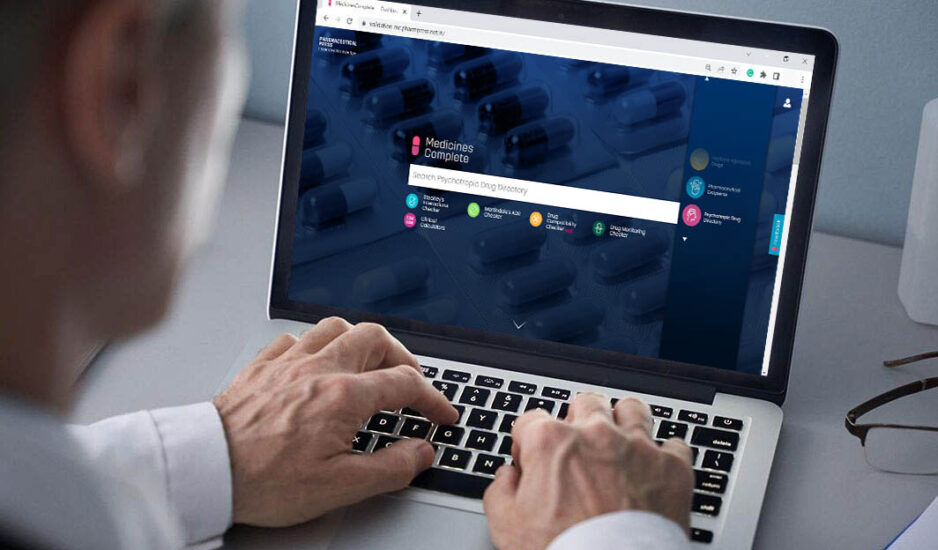
Please complete the form at the bottom of this article to request a complimentary trial of MedicinesComplete.
Molly Dennis, Clinical Writer
How have mentors positively impacted your career and work at Pharmaceutical Press?
My mentor has facilitated my development through training, which has developed my clinical and writing skills, and improved my confidence. They’ve also supported me with cross-team working, for example working with marketing to develop an understanding of wider activities within Pharmaceutical Press and increased my skill set. They motivate me and strengthen my sense of value by contributing across a breadth of areas within the business.
What does a regular day look like for you in your role?
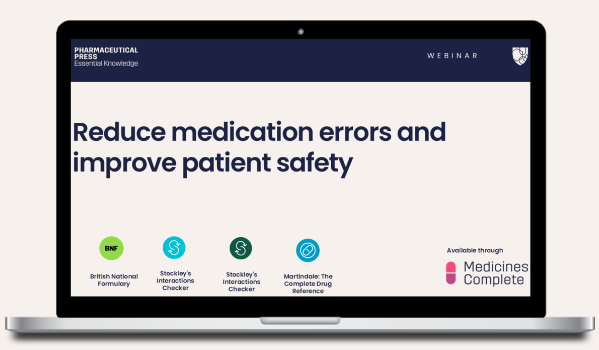
I do a mix of things. I write content for different publications, which often means that every day looks different. One example of a morning could be creating new content, for instance, for new licenced drugs. Then I could be drafting responses to clinical queries from health care professionals regarding editorial content. In the afternoon I may be cross-team working, helping marketing to create a webinar showcasing some of the products created by Pharmaceutical Press. I also provide education and training for newer team members and interns, but this is dependent on the time of year and staffing changes.
Pharmaceutical Press makes a significant impact to healthcare. How does your role contribute to that?
Our content is used by health professionals on the front line, meaning it has a direct impact on patients and their safety. My role in producing and updating this content has a positive impact within healthcare as it means the information that health professionals use is as up to date, relevant and as comprehensive as possible. This ensures care is optimised and patients are kept safe.
What tool do you find yourself using the most and how does it contribute to the work you produce?
We use work management systems quite a lot. They help us to plan and track all the different tasks that we have within the team and manage all the workflows. They also help us to understand the different pieces of content that each member of the team is working on so, we can all work together and make sure all of the editorial workloads are completed.
If you could give one piece of advice to individuals entering the science field, what would it be?
Jobs within this field are so varied, so I think a good piece of advice would be just to engage in as many opportunities as possible. There are so many doors that can open, possibly that you’d never even thought about. I’m a pharmacist, and pharmacy is quite a regimented degree, so I think just putting yourself in different situations and communicating with lots of different people helps to open a lot of doors and give you more scope to develop.
At Pharmaceutical Press we triage new information, access evidence, and create content. What do these processes look like to you?
We work closely with other teams for example, the team that produces BNF content, to understand what kind of content they’re creating and whether we need to add any content related to the side effects or interactions for those particular drugs. We triage based on the level of priority of each task. For example, if content for a new drug is being produced, it may be that we prioritise this work over amendments to existing editorial work. Each task needs to be prioritised differently, and we use our clinical understanding of the content and subject area to determine this.
Could you describe how many people are typically involved in the updates to our knowledge products?
This varies totally on the product and also the piece of content. Many people can be involved in updates. I suppose any member of the Pharmaceutical Press editorial team could theoretically be involved. It wouldn’t necessarily be every single staff member, but often, many areas within editorial are involved in producing one piece of content. We also have some specialist clinicians working on the front line that acts as advisors, ensuring the content we produce reflects clinical practice. At times, multi-professional expert bodies such as the Joint Formulary Committee are also involved.
For more article content, sign up to one of our newsletters.
Lona Mehta, Senior Clinical Writer
How have mentors positively impacted your career and work at Pharmaceutical Press?
From my very first day at Pharmaceutical Press, I entered a very positive working environment. This was my first time entering an editorial role, so I had to learn many new skills. Being a completely new area for me, the support that I was given by my mentors really helped me build a strong foundation for myself. My mentors have been a great source of inspiration and encouragement, which has helped me progress with my learning and development.
I think they’ve played a huge role in where I am today and I’m sure they’ll continue to support and guide me as I continue to build on my skills and knowledge going forward. Also, it’s great to be able to work within a company where you can suggest what you would like to learn about further and how you would like to progress in your career. It’s taken very positively and people are always there to support you and guide you, which I think is great to see.
What does a regular day look like for you in your role?
Every day can be quite different depending on the tasks that we’re working on. I think that’s one of the main reasons why I really love my role and enjoy the work that we carry out because it’s such a variation. I’m able to apply my skills and knowledge, but also at the same time, I’m learning something new.
Usually, the day starts with catching up on emails, messages, and then planning out the tasks that I’ll be working on for that particular day. I usually organise it in terms of how many meetings I have that day as well. The tasks can be a mix of handling correspondence, undertaking research, planning, carrying out content updates with the team for BNF and BNFC, as well as providing training to new clinical writers, and many other tasks.
Pharmaceutical Press makes a significant impact to healthcare. How does your role contribute to that?
As a senior clinical writer, one of my main tasks is to work with the team and create content for BNF and BNFC. I clearly understand the importance and value that BNF and BNFC hold in the day-to-day lives of health professionals in practice around the world. I have used BNF and BNFC, as well as other Pharmaceutical Press products from the very beginning of my career as a pharmacist. It’s a great feeling that I’m now able to contribute to the content creation process for products I used to use in practice, supporting health professionals in making informed decisions about prescribing, dispensing, and administering medicines.
What tool do you find yourself using the most and how does it contribute to the work you produce?
The first tool that comes to my mind is our work tracker, because that helps me stay organised and understand exactly how to prioritise my tasks. It’s also a great tool to use to communicate with other team members and colleagues to keep them updated on the tasks. We use it to make sure the updates we carry out are done in a timely manner so that health professionals can receive valuable information that supports their decision making.
If you could give one piece of advice to individuals entering the science field, what would it be?
One piece of advice I would give is to always be open to different opportunities and be willing to learn and develop. The science field always has some kind of innovation and development going on. So, there are so many opportunities for people with different skill sets to be able to work in this sector, which I think is great.
It’s also very important to think about how you can continue to build on your role further. For example, as a pharmacist, you can be working in a healthcare setting in practice, but you can also be equally utilising your skills and knowledge effectively in creating content as we do here at Pharmaceutical Press. I would definitely encourage people to step into the science sector but also think about all the different options and opportunities that are available. Just have some faith and belief in yourself and take on that challenge to try something new. I think that really helps with progressing further.
At Pharmaceutical Press we triage new information, access evidence, and create content. What do these processes look like to you?
The process of triage is very important for the work that we carry out because it involves evaluation of evidence from diverse sources. This may consist of manufacturers’ product literature, clinical guidelines, safety advice issued by the Medicines and Healthcare products Regulatory Agency (MHRA), as well as expert advice. There’s definitely a range of well-recognised sources that are evaluated, and carrying out this research and evaluation helps to ensure that the content we create is relevant to practice. So, it’s definitely a very, very important part of the content creation process that we follow.
Could you describe how many people are typically involved in the updates to our knowledge products?
Each and every content update we carry out for BNF and BNFC goes through a very detailed editorial process involving a number of people, which starts from the point of triage up to the point when the update appears on the platforms for our users. Our clinical writers within the team have a great understanding of how drugs are used in clinical practice and are responsible for editing, maintaining, and updating the content. Preparing content for publication involves a number of validation checks that occur at various stages of the content creation process, with referral to expert advisers, the Joint Formulary Committee (or Paediatric Formulary Committee), other advisory groups, or submission for peer review, if required, and a set of standard criteria are met.
Monia Ahmed, Scientific Writer
How have mentors positively impacted your career and work at Pharmaceutical Press?
Mentors have definitely helped me develop my confidence, especially when it comes to working on complex content across three of our publications. We work with Clarke’s Analysis of Drugs and Poisons, Pharmaceutical Excipients, and Herbal Medicines and Dietary Supplements. They have strengthened my ability to critically appraise literature and translate that into clear, structured material for our audience. Especially with feedback, it’s always constructive and having those discussions have reinforced the importance of accuracy and consistency in our publications.
We also collaborate closely across teams, including the therapeutics and support teams, as well as with our Content Transformations Manager, Jannah, and Content Management Systems Product Owner, Philip Lee. The cross-team working means we’re constantly learning from each other, whether it’s about scientific context, technical systems, or workflow improvements. It makes the process feel genuinely collaborative rather than siloed, and that’s had a real impact on how I approach my day-to-day work.
What does a regular day look like for you in your role?
It varies a lot, but I always begin my day with reviewing emails as this helps me identify any priorities. We also have a shared team inbox, where our externals and editors contact us, so I always check if there’s any updates from themselves. After this, I continue with our routine content updates. When it comes to our routine content updates, I would primarily review and critically appraise literature and make sure any regulatory documentation that we need to include in our publications have been updated. Basically, refining all the sections in our content to ensure that it’s consistent in terms of the terminology and the structure.
We have frequent team stand-ups, which are really helpful for staying aligned. They give us a chance to flag challenges, share updates, and set priorities for the day or week. It keeps everyone focused and makes the workload feel manageable, especially when we’re balancing routine updates alongside larger projects.
Pharmaceutical Press makes a significant impact to healthcare. How does your role contribute to that?
By ensuring that our content is evidence-based, accurate, and clearly structured, I’m in turn helping the support of safe prescribing. My role contributes to maintaining the reliability of sources and that directly influences professional practice and patient safety.
What tool do you find yourself using the most and how does it contribute to the work you produce?
We’re using Jira a lot now that it’s been implemented. We put all the work we need to do as tickets into Jira, and I look at it throughout the day to make sure I’m checking on all the work we need to update.
PubMed or Merck are my primary research tools especially when it comes to checking for analytical methods, safety data sheets and pharmacological information. So, they’re definitely essential for verifying evidence and ensuring that updates across all of our products reflect current data and the most robust information.
If you could give one piece of advice to individuals entering the science field, what would it be?
Before working with Pharmaceutical Press, I was primarily based in laboratories, toxicology laboratories to be precise. The one thing that I’ve noticed across my career and working in these different fields is that communication is so vital. What I mean by that is having the ability to change your tone depending on who you’re speaking to and providing them with clarity of complex scientific information. It’s a skill that I feel like a lot of scientists need to have or anyone entering into the science field.
Another thing I would say is that you need to remain curious and open to evolving information or evidence. If I’m referring to myself, it would be particularly in areas such as toxicology, where new data is always emerging. So yeah, I’d definitely say my piece of advice would be to work on communication and remaining curious.
At Pharmaceutical Press we triage new information, access evidence, and create content. What do these processes look like to you?
Triaging includes assessing new information: if it affects safety, interpretation, formulation guidance, or clinical use. So, evaluating the strength and relevance of that information and how reliable the data is. Especially when it comes to Clarke’s Analysis of Drugs and Poisons, how reproducible the information is. When it comes to our toxicology content, I need to consider practical implications for interpretation and real-world application.
Also, based on the impact and urgency, I would prioritise the updates and ensure they align with regulatory standards and our editorial guidelines.
Could you describe how many people are typically involved in the updates to our knowledge products?
A lot. Especially when it comes to complex information. It could be all hands-on deck from different departments. It might involve other scientific writers, clinical writers, our subject matter experts. Also, the support team, they help us out greatly, especially when it comes to QA. For our toxicology and excipients content, there could be multiple experts that would be involved. So, it’s very collaborative at all times and that helps ensure scientific accuracy, consistency and credibility across all of the publications.