
9 June 2026
Clarke’s Analysis of Drugs and Poisons
This update contains 2 major revisions to monographs and 1…
Close
Close

Close

Close
Close
Close
Close
 Clarke’s Analysis of Drugs and Poisons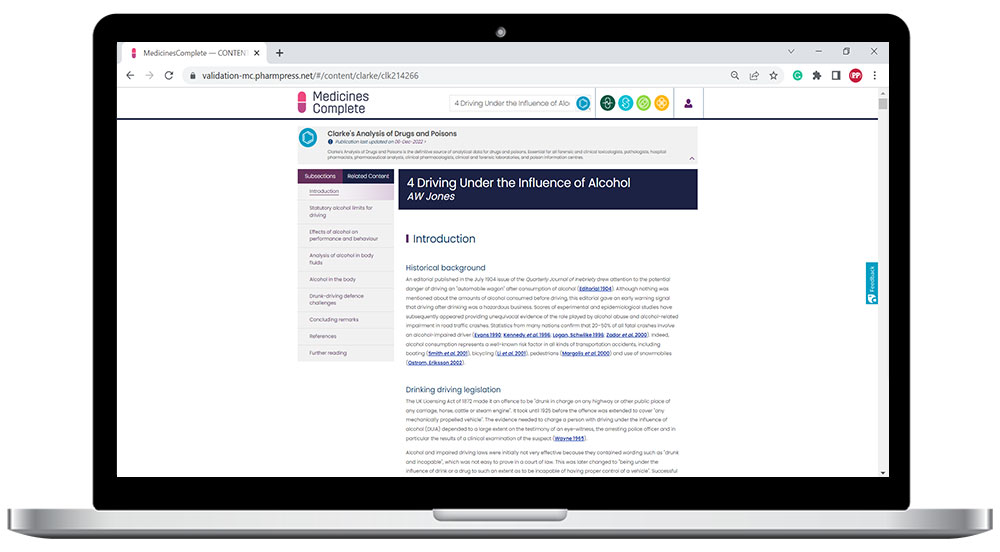

Scientists globally rely on Clarke’s Analysis of Drugs and Poisons to support confident analysis and interpretation of toxicology data.
Clarke’s Analysis of Drugs and Poisons is critical in drug development, clinical cases and forensic investigations, and supports toxicologists in every aspect of their work from drugs and alcohol in driving, to post-mortem toxicology.
This trusted resource is written by more than 40 international experts, supporting education and training as well as bench-top needs.








9 June 2026
This update contains 2 major revisions to monographs and 1…
9 June 2026
Clarke’s Analysis of Drugs and PoisonsThis update contains 2 major revisions to monographs and 1 revision to a chapter.
This update contains:
9 December 2025
This update contains major revisions to the Hospital Toxicology chapter,…
9 December 2025
Clarke’s Analysis of Drugs and Poisons10 June 2025
This update contains 4 major and 5 minor revisions to…
10 June 2025
Clarke’s Analysis of Drugs and PoisonsThis update contains 4 major and 5 minor revisions to monographs.
This update contains:
10 December 2024
IR peak selection has been reviewed for consistency across the…
10 December 2024
Clarke’s Analysis of Drugs and PoisonsIR peak selection has been reviewed for consistency across the publication with 161 minor changes in this update.
11 June 2024
This update contains 4 new monographs, 4 major revisions to…
11 June 2024
Clarke’s Analysis of Drugs and PoisonsThis update contains 4 new monographs, 4 major revisions to monographs and 2 revisions to chapters.
This update contains:
5 December 2023
This update contains 2 new monographs, 9 major revisions to…
5 December 2023
Clarke’s Analysis of Drugs and PoisonsThis update contains 2 new monographs, 9 major revisions to monographs and 1 chapter revision.
This update contains:

Access Clarke’s Analysis of Drugs and Poisons through MedicinesComplete today.
Contact us now for pricing and access information.
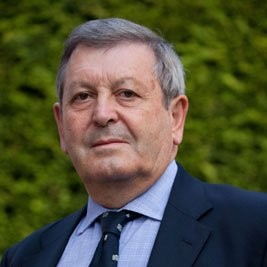
Professor M David Osselton started his forensic toxicology career in 1974 when he went to work with Dr Alan Curry at the Home Office Central Research Establishment, Aldermaston. He gained casework experience as Senior Toxicologist working at the Home Office Forensic Science laboratories in Nottingham and Huntingdon before returning to Aldermaston in 1984 to succeed Dr Anthony Moffat as Head of Research in Alcohol, Drugs and Toxicology. In 1991, he was appointed Head of Toxicology for the Forensic Science Service. In 2007, He has wide experience in toxicology casework and has been involved in numerous high profile cases working for the defence and prosecution both in the UK and overseas. He is internationally known for his research interests in toxicology and lectures widely at conferences as a plenary and keynote speaker and has over120 publications. .Between 2003 and 2009 he was Lead Assessor (Toxicology) for the UK Council for the Registration of Forensic Practitioners (CRFP) and was Visiting Professor to the Department of Forensic Science and Drug Monitoring at Kings College, University of London (2004–2007). Professor Osselton subsequently went to Bournemouth University where he was Head of Department of Archaeology, Anthropology and Forensic Sciences (2007 – 2017).
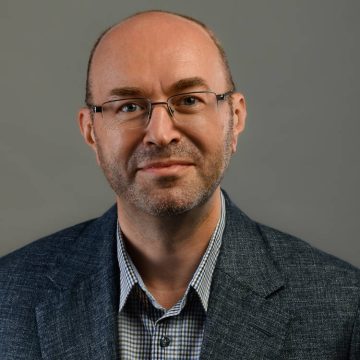
Dr Simon Elliott has over 30 years experience in toxicology casework including clinical, post-mortem and various criminal case types. He is currently a Consultant Forensic Toxicologist and Director of Elliott Forensic Consulting and Toxicology UK Ltd as well as Visiting Professor in Forensic Toxicology at King’s College London. He was previously the Director of Global Forensics at Abbott (formerly Alere Inc) (2017–2018) having also been the founder and Managing Director of Forensics Ltd (ROAR Forensics, subsequently Alere Forensics) in Malvern, Worcestershire, UK (2008–2017). With an experimental background in toxicological analysis since 1995, he has previously worked as a Clinical Scientist in the NHS for over 10 years specifically involved in clinical and forensic toxicology as Section Head of Forensic Toxicology at City Hospital, Birmingham. He holds a BSc degree in Biochemistry from the University of Bath and a PhD in Biochemical Toxicology from the University of Birmingham where he studied gamma-hydroxybutyrate (GHB) in his thesis. He is a Chartered Scientist and European Registered Toxicologist as well as being an active member of a number of professional organisations, including The International Association of Forensic Toxicologists (TIAFT – current President), the LTG (formerly known as the London Toxicology Group), the Chartered Society for Forensic Sciences and Royal Society of Chemistry in addition to being a founding council member and former Chair of the UK & Ireland Association of Forensic Toxicologists (UKIAFT). Prior to its closure, he was an Assessor in Toxicology for the UK Council for the Registration of Forensic Practitioners (CRFP). Dr Elliott has been an Associate Editor of the Journal of Analytical Toxicology and Drug Testing and Analysis as well as an Editor of Wiley’s WIREs Forensic Science (Toxicology) and continues to serve on journal editorial boards. He is the author of over 100 scientific publications, articles and book chapters and has presented at many national and international meetings and presented evidence for many years in both Coronial, Civil and Criminal Courts, including expert opinion. He is a Member of the Expert Committee for Drug Dependence at the World Health Organisation and advises the United Nations Office on Drugs and Crime. Dr Elliott is a visiting lecturer in forensic toxicology at various Universities and has been an invited keynote speaker internationally. He has many years experience and research focus in new psychoactive substances (NPS).
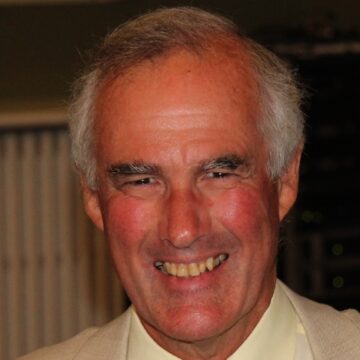
Tony is Emeritus Professor of Pharmaceutical Analysis at the UCL School of Pharmacy and a long-standing editor of Clarke’s Analysis of Drugs and Poisons, involved since it’s 1st edition. Tony’s career has spanned over 20 years in the UKs Forensic Science Service and seen an appointment as the Royal Pharmaceutical Society’s Chief Scientist.